PoE vs. Wi-Fi Security Cameras
PoE provides wired power and data over one Ethernet cable. Wi-Fi reduces data cabling, while battery and solar cameras also remove the need for nearby power.
Quick answer
PoE is usually the best starting point for a permanent multi-camera system, especially when Ethernet can run through an attic, basement, crawlspace, or unfinished wall. Plug-in Wi-Fi makes more sense when that cable route would be difficult or expensive but a nearby AC outlet is available. Battery or solar Wi-Fi covers locations without Ethernet or a nearby outlet. For either Wi-Fi option, test the camera at the exact mounting location to make sure the signal from your router or mesh access point is strong enough for reliable live view, alerts, and recordings.
PoE carries power and data in one cable. A plug-in Wi-Fi camera sends data wirelessly but still needs an outlet.
We may earn a commission if you buy through links in this guide, at no extra cost to you.
Choose the camera system around the installation
PoE systems fit permanent coverage where a cable run is practical. Wi-Fi cameras make more sense for a single difficult location, but they still need dependable power and a strong network connection.
Last reviewed August 3, 2026.
What changes between PoE and Wi-Fi?
| Decision | PoE | Plug-in Wi-Fi | Battery or solar Wi-Fi |
|---|---|---|---|
| Camera wiring | One Ethernet cable | Power cable to a nearby AC outlet | No Ethernet or AC power cable at the camera |
| Data connection | Wired Ethernet | Wi-Fi to your router or mesh access point | Wi-Fi to your router or mesh access point |
| Typical recording fit | Continuous or event recording | Continuous or event recording, depending on model | Usually event clips; some models also take interval snapshots |
| Installation effort | Highest when running new Ethernet through a finished home | Moderate when a nearby AC outlet is available | Lowest at the camera location |
| Storage choices | Recorder, MicroSD card, network storage, or cloud, depending on model | MicroSD card, hub, recorder, network storage, or cloud, depending on model | MicroSD card, hub, or cloud, depending on model |
What a wired PoE connection changes
The camera does not rely on a Wi-Fi connection. One Ethernet cable carries both network data and power, and an NVR can keep recordings from several cameras in one place. Many standalone PoE cameras also have a MicroSD card slot, although storage support varies by model. The tradeoff is running cable through walls, attics, basements, crawlspaces, or protective conduit outdoors.
When plug-in Wi-Fi makes sense
Plug-in Wi-Fi is practical for one or two cameras when the signal from your router or mesh access point is strong at the mounting location and a nearby AC outlet is available. Test the exact location through the real exterior wall. Brick, concrete, metal siding, detached buildings, distance, and interference from nearby networks can weaken the connection.
Battery and solar recording limits
Many battery cameras conserve power by waking for motion events. The Tapo C660 also takes snapshots at regular intervals between event clips. That feature is similar to a time-lapse and is not conventional nonstop full-motion recording. Check how much video is captured before and after an event, the delay before another clip can begin, maximum clip length, and where recordings are stored.
Cost checklist
- Camera and recorder or hub
- Hard drive or MicroSD cards
- PoE switch, Ethernet cable, connectors, and installation tools
- Wi-Fi access point or mesh upgrade
- Solar panel, spare battery, or charger
- Required subscriptions over three years
- Professional cable or electrical work
Security applies to both
PoE does not automatically make a camera private, and Wi-Fi does not automatically make it insecure. Use current firmware, unique credentials, multi-factor authentication, restricted users, and protected remote access. Avoid direct internet port exposure as a default setup.
Examples of all three approaches
Wired NVR system
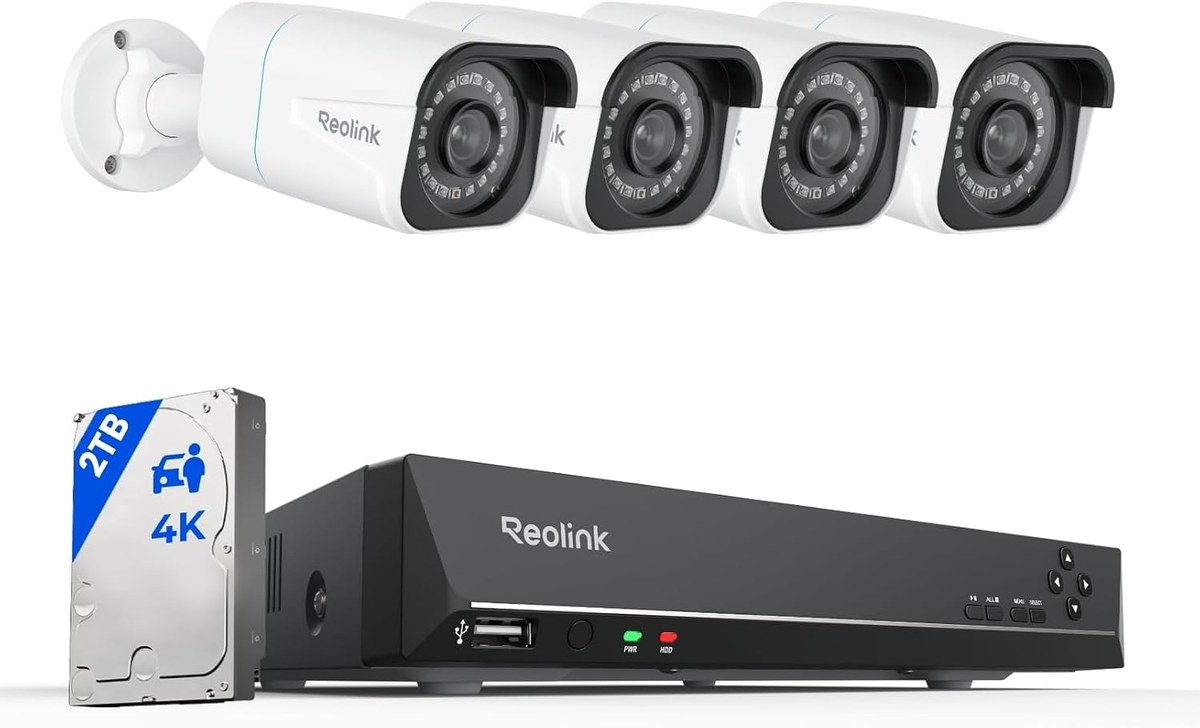
Reolink RLK8-800B4
Useful for: A permanent multi-camera installation with centralized 24/7 local recording.
Why it belongs here: The kit combines four PoE cameras with an eight-channel network video recorder (NVR) and included 2TB hard drive. One Ethernet cable carries power and data to each camera. It can record continuously, on a schedule, or when motion, a person, or a vehicle is detected.
Rough budget band: $550-$650 for the complete system: four cameras, an eight-channel NVR, and a 2TB hard drive. This is the bundle price, not the price per camera.
Skip if: Running Ethernet is impractical, you rent, or you only need one simple camera.
Plug-in Wi-Fi
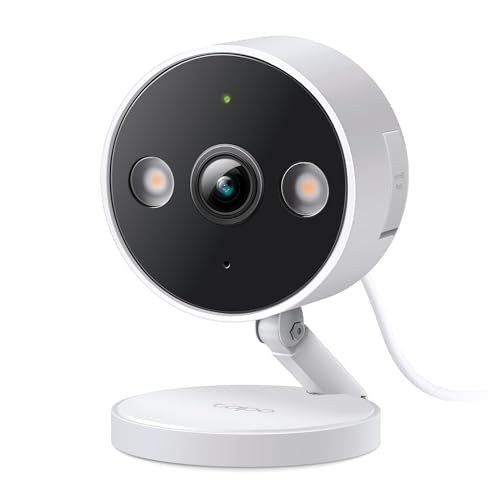
Tapo C120
Useful for: One or two locations with a strong 2.4 GHz Wi-Fi signal and a nearby AC outlet.
Why it belongs here: It sends video over Wi-Fi but uses a 5V power adapter, so it can record continuously to a MicroSD card without battery charging. Tapo includes a 9.8-foot power cable and supports cards up to 512GB.
Rough budget band: $30-$50 per camera. The power adapter and cable are included; a MicroSD card is sold separately.
Skip if: The mounting location has no nearby outlet, the Wi-Fi signal is weak, or you want a wired network connection.
Solar pan and tilt
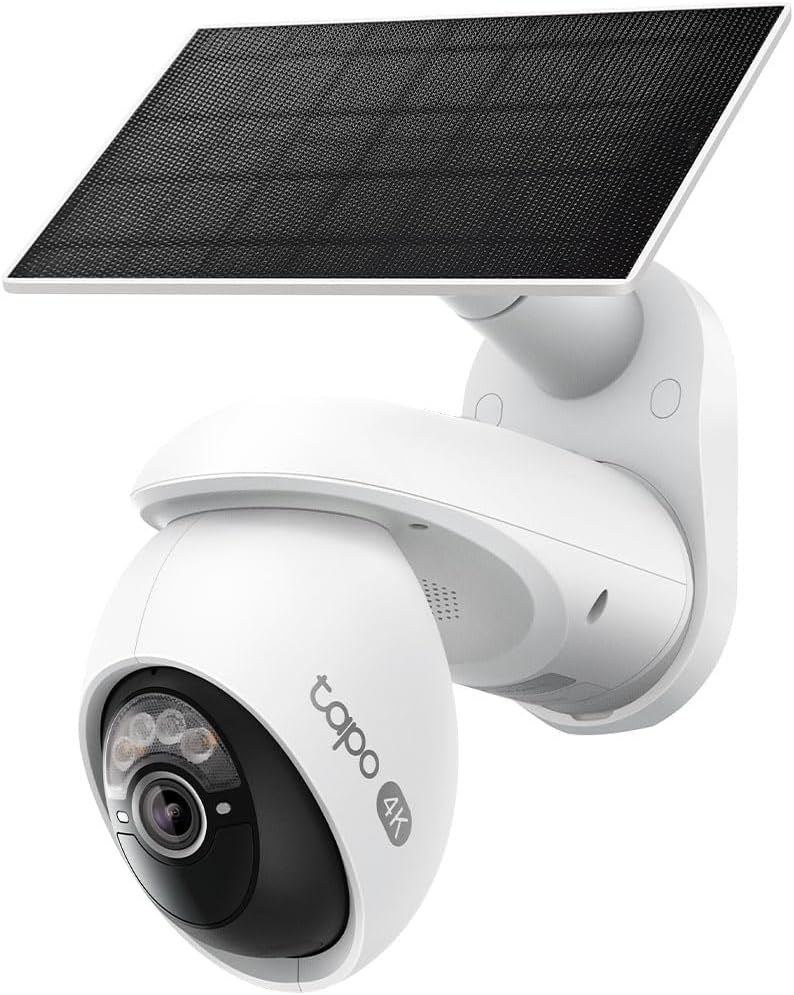
Tapo C660 Kit
Useful for: A location without nearby power that benefits from pan, tilt, tracking, and MicroSD storage.
Why it belongs here: Tapo lists 4K video, person, pet, and vehicle detection without a paid plan, 360-degree tracking, dual-band Wi-Fi, and MicroSD storage up to 512GB.
Rough budget band: $100-$150 for one camera and the included solar panel. A MicroSD card is sold separately.
Skip if: You need a wired data path, protected centralized storage, or conventional nonstop full-motion recording.
For product recommendations organized around local storage and subscription avoidance, see our security cameras without a subscription guide.
Research boundary
This guide compares how these camera types are powered, connected, installed, and documented by their manufacturers. It does not claim a universal range, alert delay, or image-quality advantage for every PoE or Wi-Fi camera.