Best Outdoor Security Cameras Without a Subscription
Choose the storage architecture first. These picks cover exterior cameras, not video doorbells or indoor cameras. A camera is only subscription-free if recording, playback, useful alerts, and clip export still work after the trial ends.
Quick answer
Use a PoE and NVR system for permanent multi-camera coverage, a hub-based battery kit when wiring is impractical, or a MicroSD camera for one difficult location. Local storage avoids a required cloud plan, but it does not remove firmware, account, placement, or network-security responsibilities.
We may earn a commission if you buy through links in this guide, at no extra cost to you.
Products and availability checked August 3, 2026.
Compare the three storage paths
| Product | Storage | Power and data | Recording | Best fit |
|---|---|---|---|---|
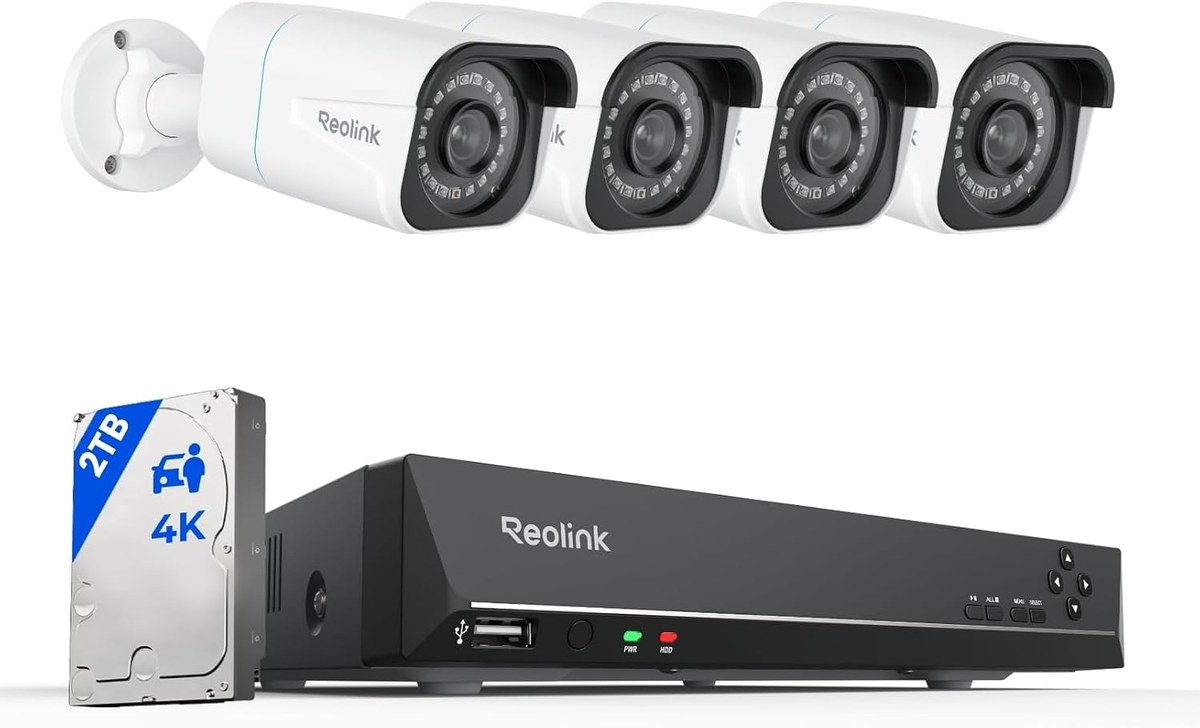
| Reolink RLK8-800B4 | 2TB HDD included; expandable | PoE Ethernet | 24/7, scheduled, or detection-triggered clips | Permanent multi-camera system |
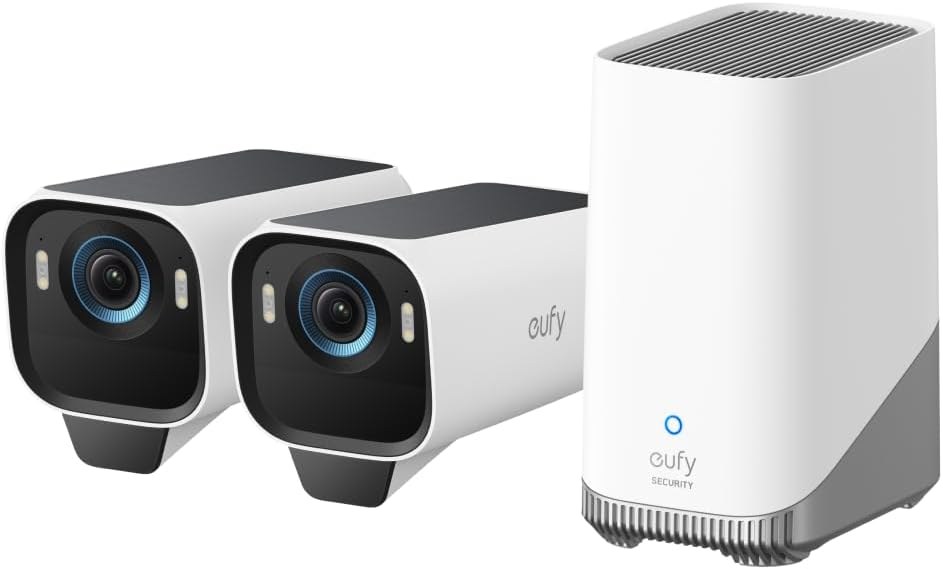
| EufyCam S3 Pro 2-Cam Kit | HomeBase 3: 16GB built in; up to 16TB with added drive | Battery and solar | Motion-triggered event clips | Wire-free two-camera kit |
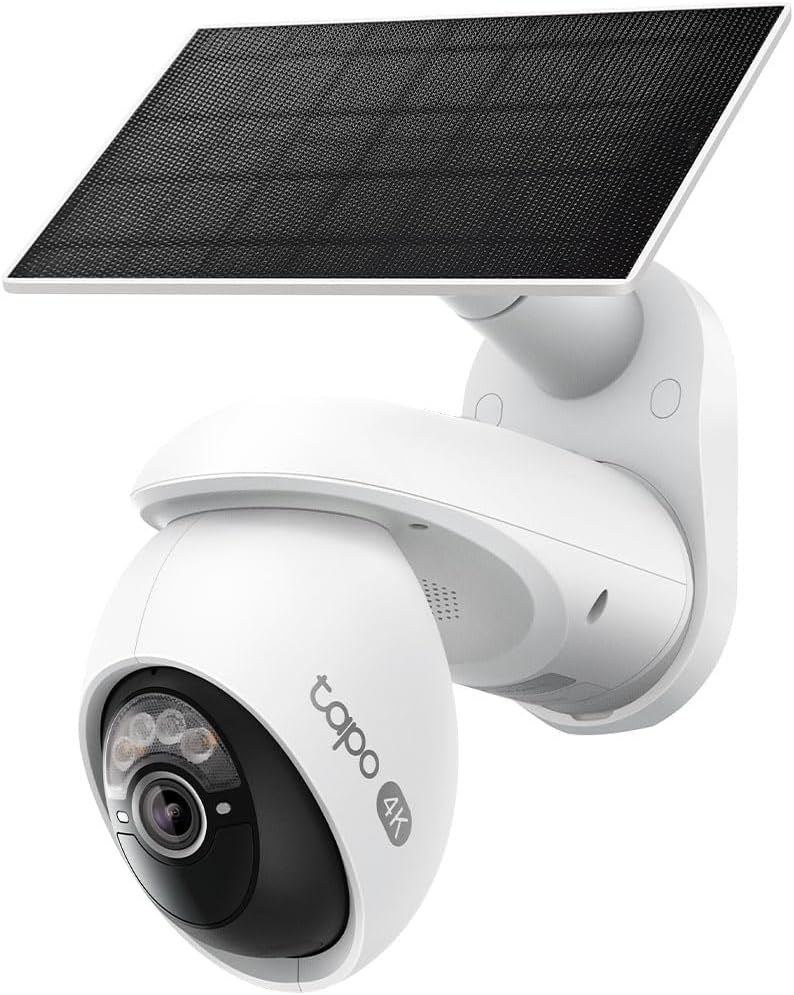
| Tapo C660 Kit | MicroSD up to 512GB | Battery and solar | Detection-triggered video plus optional interval snapshots | Remote corners without power |
Recommended starting points
Wired NVR system
Reolink RLK8-800B4
Useful for: A permanent multi-camera installation with centralized 24/7 local recording.
Why it belongs here: The kit combines four PoE cameras with an eight-channel network video recorder (NVR) and included 2TB hard drive. One Ethernet cable carries power and data to each camera. It can record continuously, on a schedule, or when motion, a person, or a vehicle is detected.
Rough budget band: $550-$650 for the complete system: four cameras, an eight-channel NVR, and a 2TB hard drive. This is the bundle price, not the price per camera.
Skip if: Running Ethernet is impractical, you rent, or you only need one simple camera.
 Wire-free hub kit
EufyCam S3 Pro 2-Cam Kit
Useful for: Two wire-free exterior cameras with a eufy HomeBase 3 storage and management hub.
Why it belongs here: HomeBase 3 is eufy’s proprietary in-home hub. It includes 16GB of built-in storage and accepts a standard 2.5-inch SATA HDD or SSD up to 16TB. The added drive is not included.
Rough budget band: $400-$500 for two cameras and HomeBase 3. An optional hard drive or SSD is sold separately.
Skip if: You want open NVR interoperability, Ethernet reliability, or guaranteed continuous video rather than event-driven battery recording.
 Solar pan and tilt
Tapo C660 Kit
Useful for: A location without nearby power that benefits from pan, tilt, tracking, and MicroSD storage.
Why it belongs here: Tapo lists 4K video, person, pet, and vehicle detection without a paid plan, 360-degree tracking, dual-band Wi-Fi, and MicroSD storage up to 512GB.
Rough budget band: $100-$150 for one camera and the included solar panel. A MicroSD card is sold separately.
Skip if: You need a wired data path, protected centralized storage, or conventional nonstop full-motion recording.
What the storage and recording terms mean
NVR: A network video recorder is a dedicated box that stores video from multiple cameras. The Reolink kit includes a 2TB hard drive. Current Reolink specifications list expansion up to 16TB, but Reolink has shipped different NVR hardware versions, so confirm the recorder model and supported drive sizes before upgrading.
HomeBase 3: This is eufy’s proprietary hub for managing compatible cameras and storing their clips locally. It has 16GB built in and a bay for a standard 2.5-inch SATA HDD or SSD up to 16TB.
Tapo interval capture: This is a time-lapse-like series of still images taken at selectable intervals, such as every 1, 5, 10, or 60 seconds, between detection events. When the camera detects a person, pet, vehicle, or motion, it switches to normal video recording. It is not nonstop full-motion video.
What “without a subscription” should include
Confirm live view, alerts, recording, playback, and clip export after every free trial ends. Local recording does not necessarily mean offline operation or freedom from a vendor account. Some cloud-centered systems leave live view available but put recorded history and object-specific alerts behind a plan. Ring currently lists video history and person, package, and vehicle alerts inside its paid Solo and Multi tiers, so it is not one of the subscription-free picks here.
The real ownership cost
Compare hardware, hub or NVR, storage media, cable installation, optional solar panels, and three years of any required plan. A cheap cloud camera can cost more over time. A PoE system can cost more upfront if professional cable installation is necessary.
Security and privacy checklist
- Use a unique password and enable multi-factor authentication.
- Keep cameras, hubs, recorders, apps, and the router updated.
- Do not expose camera ports directly to the internet as a default setup.
- Restrict shared access and remove people who no longer need it.
- Use a separate IoT network when your router supports it and you can maintain the setup.
- Aim exterior cameras at your property and check local audio-recording rules.
- Be conservative with indoor cameras; a physical privacy shutter or power control is preferable in private rooms.
PoE, Wi-Fi, or battery?
Read our PoE versus Wi-Fi security camera guide, publishing August 4 before paying for a multi-camera system.
How this guide was researched
We compared current manufacturer documentation, Amazon availability, local-storage behavior, power and data paths, recording modes, detection features available without a paid plan, expansion limits, and subscription dependencies. We do not claim hands-on image-quality or alert-latency testing of these cameras.
Check the recommendations
Prices change, so use the current Amazon pages for the latest offer.
Check the Reolink PoE system on Amazon
Check the eufyCam S3 Pro kit on Amazon
Check the Tapo C660 kit on Amazon