Cold-Weather Tire-Pressure Warning: What to Check First
If the tire-pressure warning appears after a cold snap, check every tire against the cold pressure on your vehicle’s driver-door label or owner’s manual. Do not set pressure from the maximum number molded into the tire sidewall.
Last reviewed: September 13, 2026.
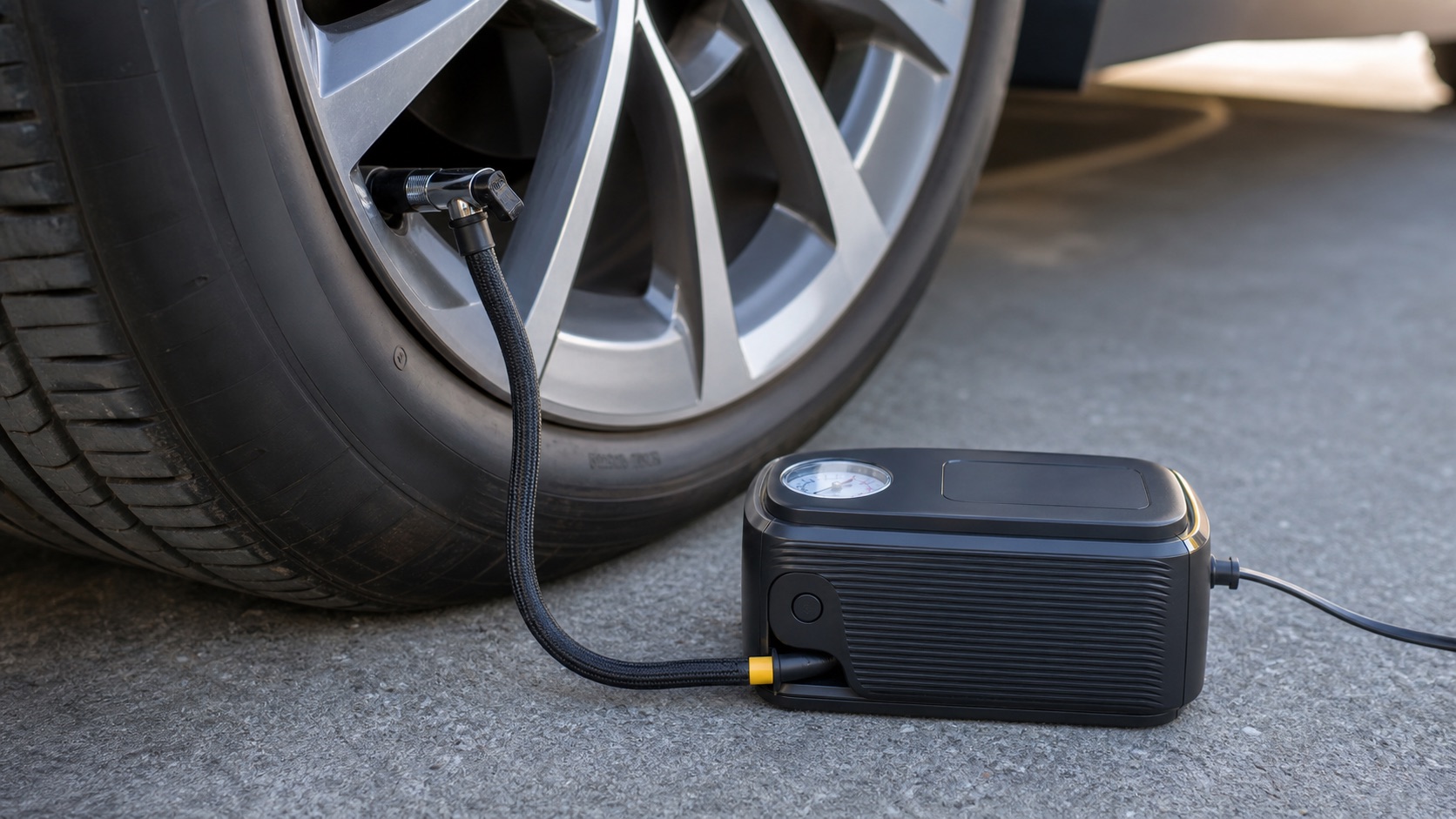
Check the pressure when the tires are cold
NHTSA defines a cold tire as one that has not been driven for at least three hours. That is the condition for the pressure on the vehicle’s Tire and Loading Information label. Use a tire gauge on all four tires and the spare if your vehicle has one, then compare each reading with the label or owner’s manual.
Use the vehicle’s number, not the tire sidewall number
The label is commonly on the driver-side door edge or post. It may list different front and rear pressures, so check both lines before adding or releasing air. The number on the tire sidewall is not the correct target for your vehicle; NHTSA specifically directs drivers to follow the vehicle manufacturer’s listed pressure instead.
If one tire is low
- Note the gap between the gauge reading and the cold-pressure target.
- Add only the amount needed to reach that target, then check the reading again.
- If you had to check after driving, treat the result as temporary and recheck when the tires are cold. NHTSA says a warm-tire reading needs compensation for the extra pressure.
A warning light is a reason to inspect, not a diagnosis. If a tire repeatedly loses pressure, has visible damage, or the warning stays on after you have checked and adjusted the tires to the vehicle maker’s guidance, have the tire and the monitoring system evaluated by a qualified tire professional. Follow your owner’s manual for the vehicle-specific TPMS procedure.
Do not ignore a tire-pressure warning in winter
Low pressure can affect handling and tire life. NHTSA warns that poor tire maintenance, including insufficient air, can contribute to a flat, blowout, or tread separation. If the tire is visibly flat or damaged, do not assume adding air makes it safe to drive. Use roadside assistance or a qualified service provider when the condition is uncertain.
Keep the rest of the winter plan simple
Pair this check with a winter car emergency kit, a roadside emergency checklist, and a practical snow brush and ice scraper. If you are preparing for a trip, review what to do if your car is stuck in snow and browse current Car Gear Deals.
Sources and accuracy note
This is general tire-maintenance information, not a substitute for your vehicle’s owner’s manual or a tire inspection. It is based on NHTSA’s TireWise tire-maintenance guidance, checked September 13, 2026. Use your vehicle’s label and manufacturer instructions for the correct pressure and any TPMS reset or service procedure.