What to Do if Your Car Is Stuck in Snow
If the tires spin but the car barely moves, ease off the accelerator. On a level driveway or parking area, the next job is to clear a path and give the tires something to grip. A car resting on packed snow underneath needs that obstruction cleared first.
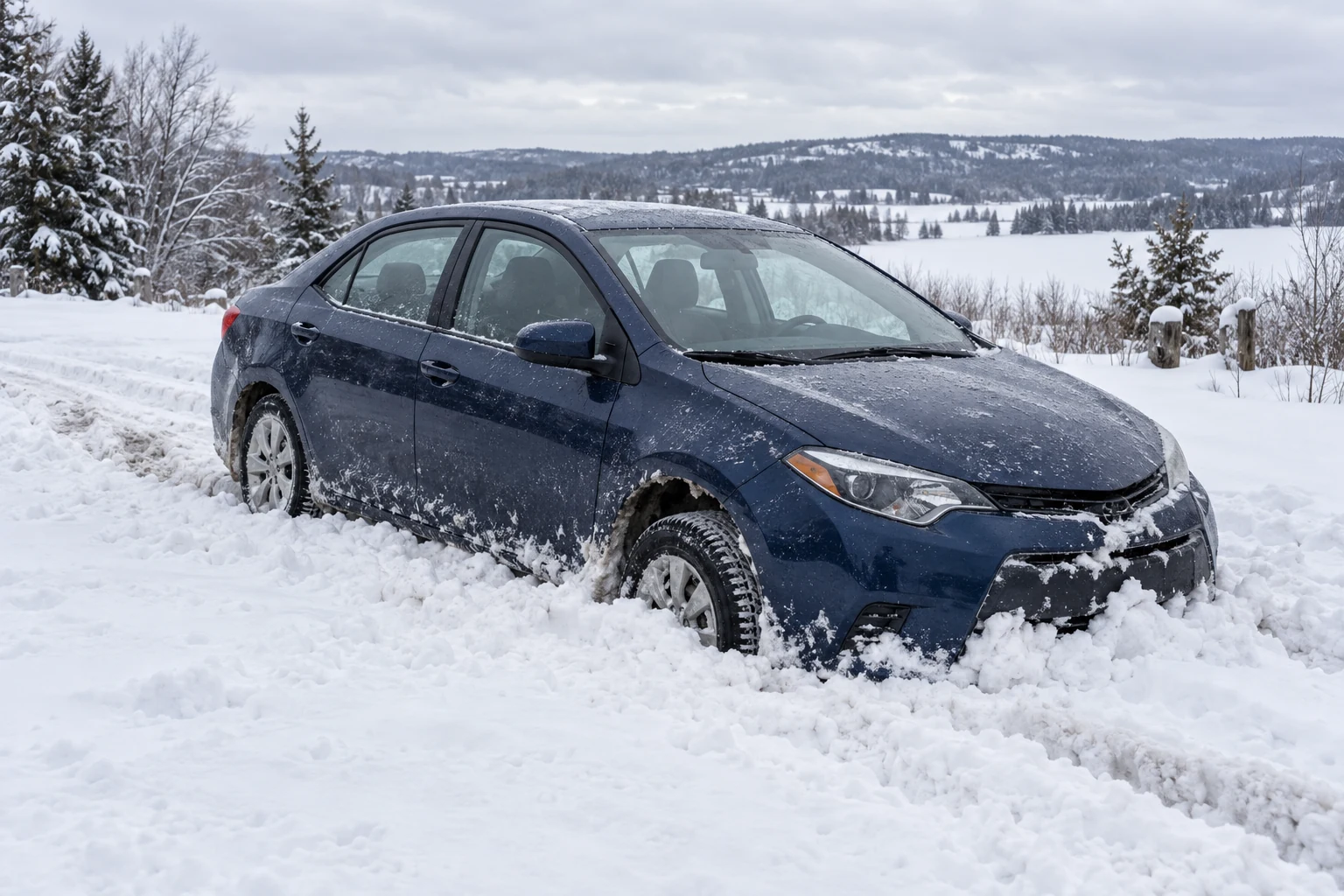
Is this a shovel job or a recovery call?
Before getting out, look at where the car is and where it would go if the tires caught. These steps are for a stationary car on reasonably level ground with room to work away from traffic.
- Level driveway or parking space, with a clear exit: clearing snow and making one gentle attempt is a reasonable starting point.
- Ditch, steep slope, or traffic beside the wheels: call for recovery. Getting traction suddenly could move the car somewhere worse.
- Injuries, immediate collision risk, or occupants unable to stay warm: call emergency services rather than treating this as a routine tow.
When calling, give your road and direction of travel, a nearby landmark or map location, and whether the car is on the road, off the shoulder, or resting on deep snow. Say how many people are with you and whether you have heat. Those details are more useful than simply saying you are stuck.
Find what is stopping the car
Wheelspin with little movement suggests a grip problem. Snow pressed against the bumper, a ridge beneath the car, or a body that appears to be resting on snow points to a clearance problem too. Inspect from beside the vehicle; do not crawl underneath it.
This changes where you spend your effort: sand belongs at the tires, while a packed ridge blocking the underside needs snow removal or professional recovery. Do not use the bumper as a plow.
Clear the route, not just a hole around one tire
Secure the car against movement before anyone shovels. Apply the parking brake, select Park in an automatic, and switch off the engine. With a manual transmission, leave it in first or reverse with the engine off. Keep the keys with the person doing the work.
- Dig ahead of and behind all four tires. Connect those spaces into a route toward the cleared surface you intend to reach. Keep the front wheels approximately straight.
- Remove reachable snow blocking the bumper and underside. Work from the side without getting beneath the car. If you cannot clear the obstruction safely, stop here.
- Clear the exhaust outlet before restarting an engine. A blocked tailpipe can send exhaust into the cabin. Recheck it if drifting snow builds up.
- Clear your view before moving. Brush snow off the roof, windows, mirrors, and lights. A shovel is for the ground, not the paint or glass.
Add traction where the tires need it
Spread sand on the cleared ground at the drive tires, in the direction you intend to move. For a front-wheel-drive car that means the front tires; for rear-wheel drive, the rear tires. For AWD or 4WD, prepare the paths at all four tires rather than assuming only the front or rear pair needs grip.
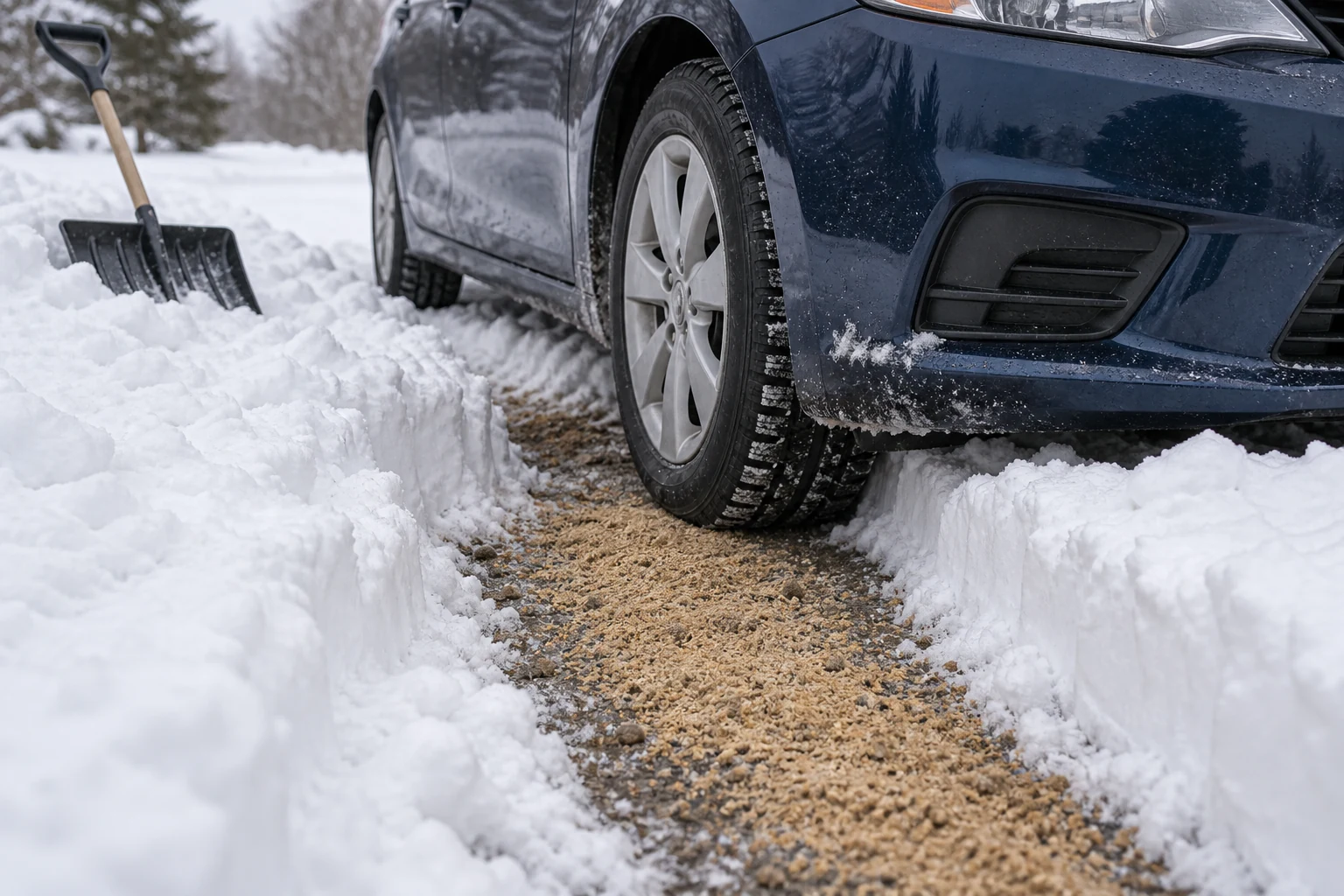
Keep everyone away from the wheels and the intended path before the driver starts the car. Nobody should be placing material while a wheel is turning.
Try gentle movement, then reassess
Choose the cleared direction with room to stop. Use light accelerator pressure. If the tires spin without gaining ground, lift off instead of holding the pedal down.
Rocking between forward and reverse is not a rapid gear-shifting trick. If your vehicle’s manual permits it, come to a complete stop before changing direction and use gentle inputs. Repeated wheelspin can overheat or damage the transmission. Stop if the car digs in, slides sideways, or shows an overheating warning.
Should you turn traction control off?
Not automatically. Some vehicles allow temporary deactivation to escape snow; others have a dedicated mode. Look up the stuck-in-snow procedure for your model, and restore normal traction control once free.
If it will not move, switch to a waiting plan
A useful stopping point is when another attempt would repeat the same wheelspin without improving the path or grip. Call roadside assistance, then conserve your energy rather than continuing to dig while exhausted.
NHTSA recommends staying with the vehicle during a winter stranding and making it visible with bright markers and the interior dome light. In an immediate hazard such as fire or a likely collision, staying inside is not an absolute rule; tell emergency dispatch what is happening.
Use blankets and extra layers for warmth. Outside, keep the tailpipe clear and run the engine only intermittently for warmth; avoid prolonged running with the windows closed. Never run the engine in an enclosed space. Clearing the tailpipe once is not enough if snow keeps drifting around it.
What is worth keeping in the trunk?
A compact shovel and traction material address different problems, so carrying both makes sense. Add a snow brush for visibility, plus blankets and a phone charger for a longer wait. Our winter car emergency kit checklist covers the rest; the snow brush guide helps with clearing the car itself. Keep the roadside emergency checklist for breakdowns beyond snow.
Sources and accuracy note
Checked September 11, 2026. This is a researched guide, not a hands-on recovery test. The digging and gentle-movement advice draws on AAA’s snow-removal guidance; wheel alignment and winter-driving guidance comes from The AA. Waiting, visibility, and exhaust precautions come from NHTSA. An example of a model-specific temporary traction-control-off procedure appears in the 2025 Ford Bronco manual.