Best RV Leveling Blocks of 2026
Parking on uneven ground is normal at many campgrounds. Leveling blocks raise the low side of an RV or trailer so sleeping and walking feel more comfortable and an absorption refrigerator is less likely to lose cooling while the RV sits parked for hours. Your RV and appliance manuals still control the setup.
We may earn a commission if you buy through links in this guide, at no extra cost to you.
Quick answer
For most RV owners who want a modular block system, Lynx Levelers 11-Pack with Level Top is a versatile default. Tri-Lynx rates the blocks to 40,000 pounds, recommends stacking no higher than five inches, and offers a 10-year warranty after registration. If you prefer a curved ramp for small height adjustments, Beech Lane Camper Leveler 2-Pack includes chocks and grip mats. If you want a 12-piece kit with two top blocks, Kohree Heavy Duty RV Leveling Blocks, 12-Pack includes 10 lower blocks, two top blocks, and a carrying bag.
What this guide helps you solve
For a travel trailer, blocks commonly handle side-to-side leveling by raising the tires on the low side. Motorhomes and RVs with installed leveling systems may use a different sequence. The correct height, block layout, and procedure depend on the RV, tire spacing, surface, and the instructions for the exact leveling product.
- Stackable interlocking blocks can work under single wheels, dual wheels, tandem axles, and some jack feet when the product maker allows it. Build the stack only in the approved pattern and stay below its maximum height.
- Curved ramp-style levelers make small height adjustments without rebuilding a stack. They can work for single- or dual-axle trailers, but tight dual-axle spacing may require a model-specific fit check or permitted trimming.
- For a travel trailer, level side to side, chock the wheels before unhitching, then level front to back. Use ordinary stabilizer jacks only to reduce movement unless the RV maker says the installed system is designed to level or lift.
Last reviewed: August 24, 2026
Stackable blocks or curved ramp levelers?
Stackable interlocking blocks are the traditional design: you build a small pyramid to the height you need, then drive onto it. They work well for single-wheel and many dual-wheel setups, pack down small, and are usually the cheaper option per pack.
Curved ramp-style levelers replace a stepped stack with a continuous ramp, which makes small height adjustments easier. They are not limited to dual-axle trailers. For a tight dual-axle setup, measure the space between the tires before buying: Beech Lane says up to four inches may need to be trimmed from one leveler, depending on tire spacing.
Either style must fit the RV’s weight, tire layout, and required lift. Follow both the RV owner’s manual and the leveling-product instructions for placement, surface limits, stack pattern, and maximum height. If the site is soft or shifting, move to firmer ground or use only the pads or base method approved for that RV and product.
| Pick | Leveler | Style | Limits and kit details | Watch-outs |
|---|---|---|---|---|
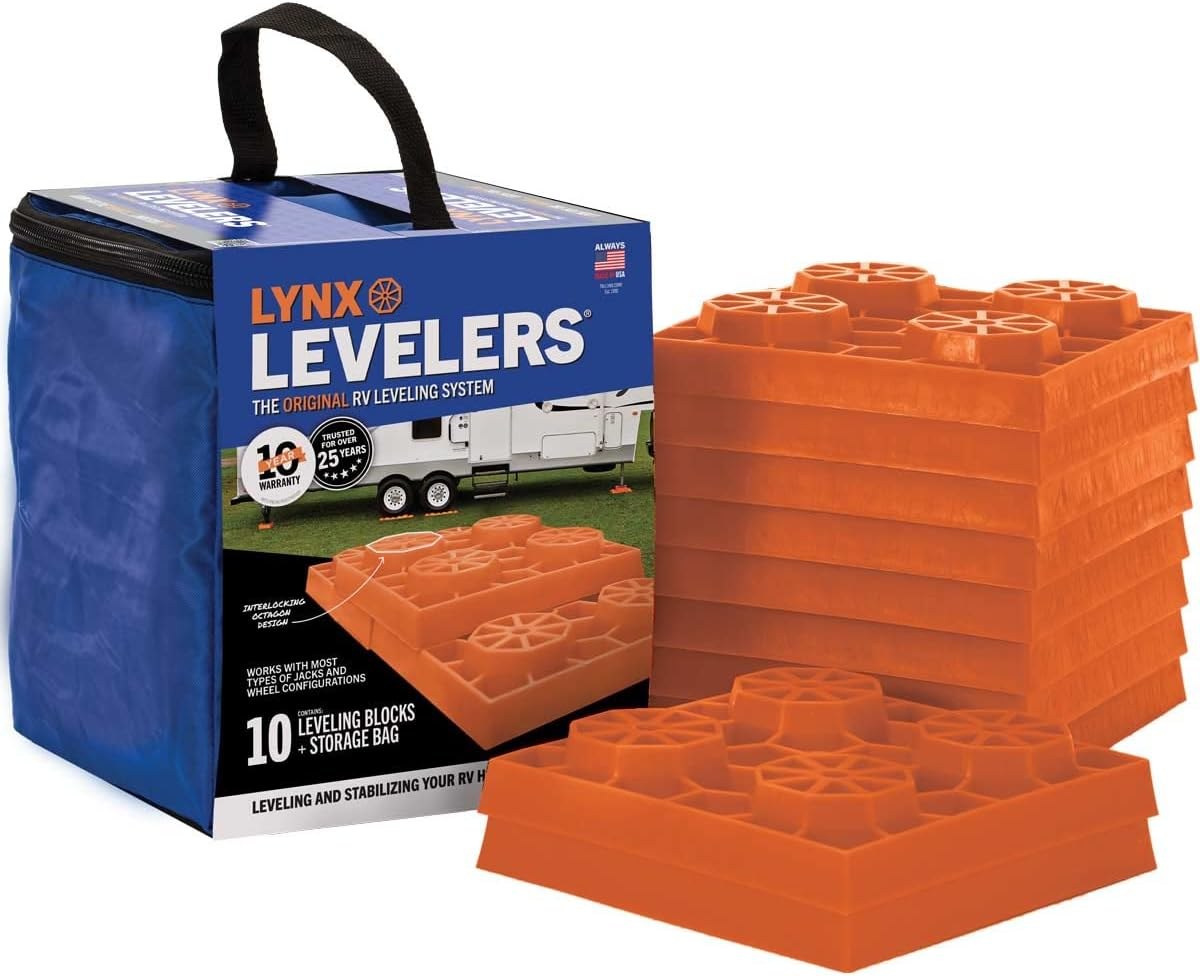
| Best overall | Lynx Levelers 11-Pack with Level Top | Stackable interlocking blocks | 40,000 lbs; maximum 5-inch stack | Skip if you specifically want a curved ramp-style leveler for faster dual-axle setup instead of stacking blocks. |
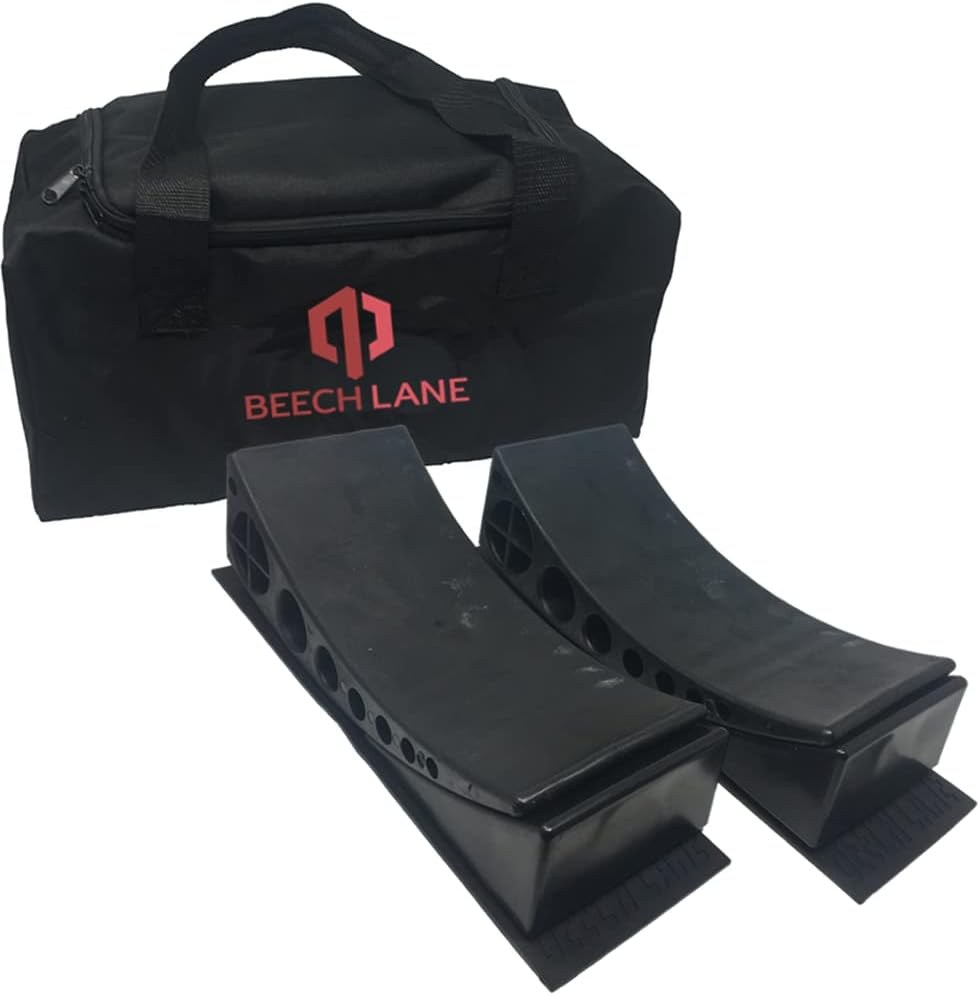
| Best curved ramp leveler | Beech Lane Camper Leveler 2-Pack | Curved ramp with chocks and grip mats | Up to 35,000 lbs; curved adjustment to 4 inches | Skip if your dual-axle tire spacing is very tight; the manufacturer notes up to 4 inches may need to be trimmed off one ramp depending on your specific tire spacing. |
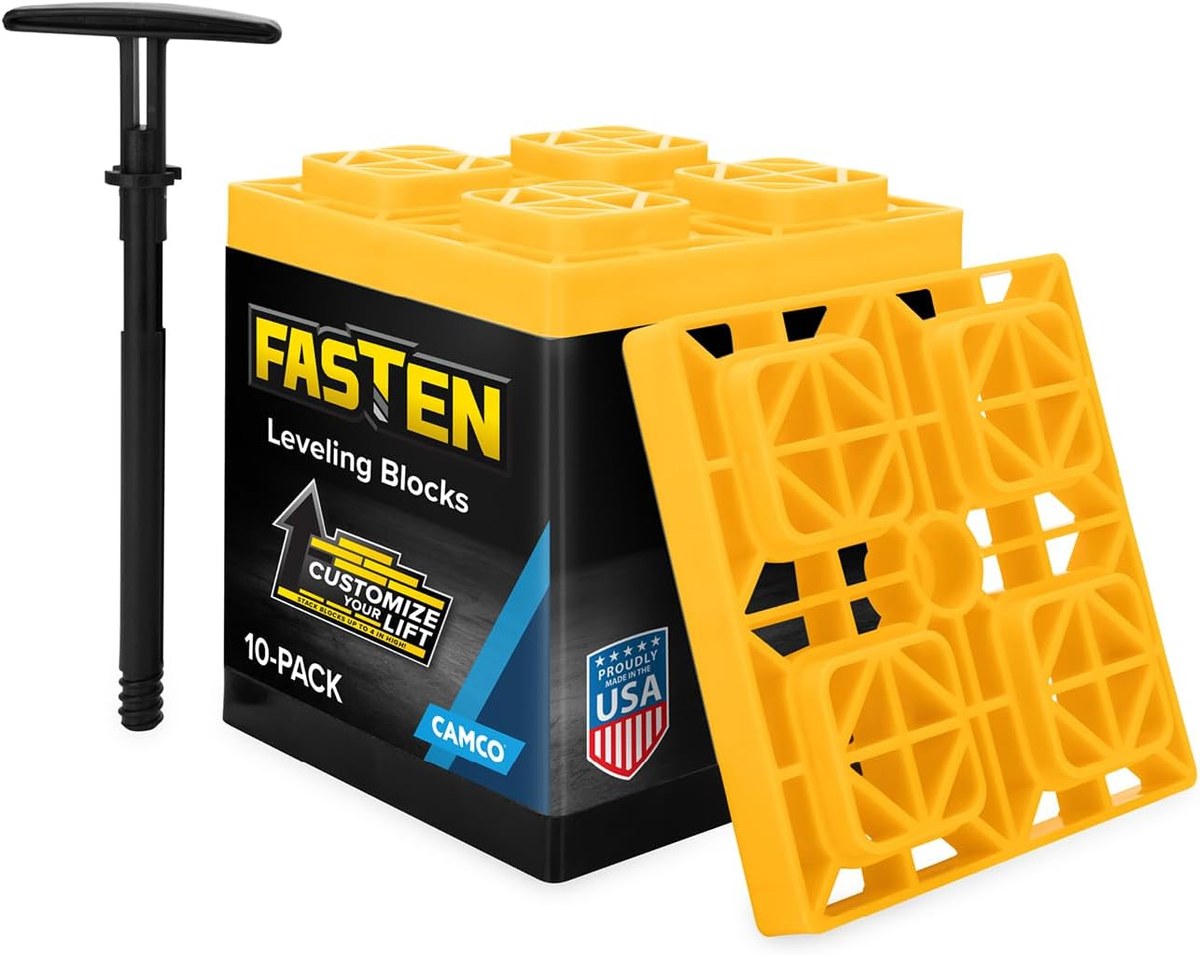
| Best from a known RV brand | Camco FasTen RV Leveling Blocks, 10-Pack | Stackable interlocking blocks | 10 interlocking blocks; follow Camco’s current instructions | Skip if you want the lowest price per block; this kit runs higher per-pack than some competing block sets. |
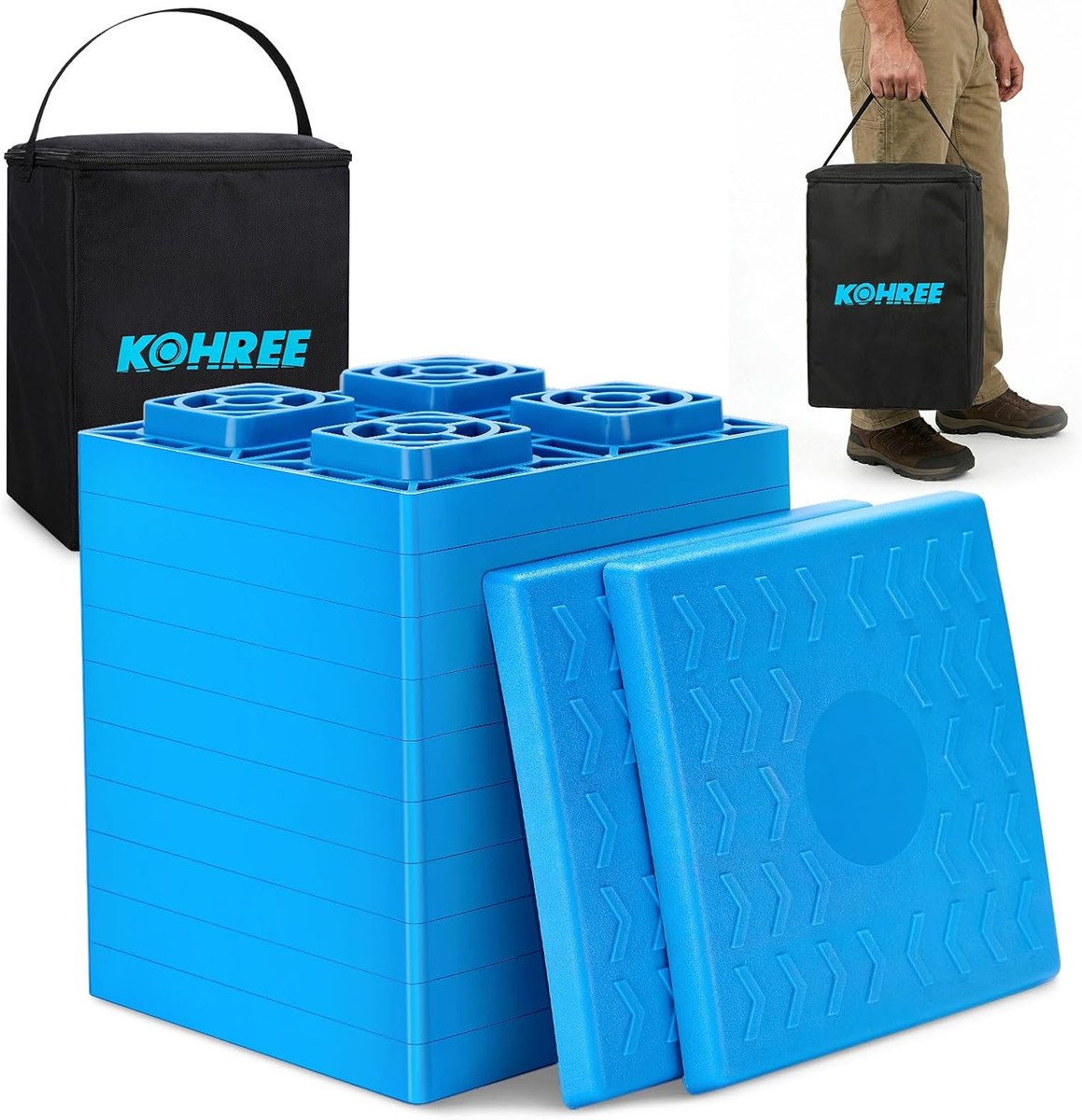
| Best budget block set | Kohree Heavy Duty RV Leveling Blocks, 12-Pack | Stackable interlocking blocks | 12 pieces: 10 lower blocks plus 2 top blocks | Skip if you want the very largest review base; this pick has fewer reviews than the top overall and budget-alternative picks in this guide. |
Recommended picks
 Best overall
Lynx Levelers 11-Pack with Level Top
A modular interlocking kit for single wheels, dual wheels, tandem axles, and approved jack-foot support. The current Amazon set adds one level top to the 10-block kit.
Why we picked it: Tri-Lynx states a 40,000-pound weight limit, a maximum five-inch stack, and a 10-year warranty after registration. The company says it has made this leveling system in the United States since 1993.
Skip if: Skip if you specifically want a curved ramp-style leveler for faster dual-axle setup instead of stacking blocks.
 Best curved ramp leveler
Beech Lane Camper Leveler 2-Pack
A curved ramp-style kit with two levelers, two wheel chocks, two rubber grip mats, and a carrying bag for buyers who prefer continuous height adjustment over a stepped stack.
Why we picked it: Beech Lane rates each leveler to 35,000 pounds, includes two grip mats in the two-pack, and covers the levelers with a lifetime warranty.
Skip if: Skip if your dual-axle tire spacing is very tight; the manufacturer notes up to 4 inches may need to be trimmed off one ramp depending on your specific tire spacing.
Best from a known RV brand
Camco FasTen RV Leveling Blocks, 10-Pack
A stackable interlocking leveling block kit from Camco, a long-established RV accessories brand, with an integrated carrying T-handle that twists to lock the stack together for storage.
Why we picked it: Camco is a widely recognized RV accessories brand, and this kit's integrated T-handle design makes carrying and locking the stack together for storage noticeably easier than loose blocks.
Skip if: Skip if you want the lowest price per block; this kit runs higher per-pack than some competing block sets.
 Best budget block set
Kohree Heavy Duty RV Leveling Blocks, 12-Pack
A 12-piece stackable leveling block kit (10 blocks plus 2 flat top blocks) aimed at buyers who want a lower-cost option for single or dual-wheel leveling.
Why we picked it: Kohree specifies 10 lower blocks, two top blocks, reinforced material, and an included carrying bag. The maker lists compatibility with single and dual wheels plus several jack types, subject to the RV and jack instructions.
Skip if: Skip if you want the very largest review base; this pick has fewer reviews than the top overall and budget-alternative picks in this guide.
What we look for
- A clearly stated weight or load limit that covers the exact RV, trailer, tire layout, and application.
- A textured or non-slip surface that grips tires and jacks instead of sliding under load.
- An interlocking or nesting design that stacks securely instead of shifting apart.
- A carrying bag or handle for storage and transport between trips.
- Strong buyer feedback across a large number of ratings, not just a handful of reviews.
What we would skip
- Blocks or ramps with no clearly stated weight rating for your class of RV or trailer.
- Stacking loose wood blocks or scrap lumber instead of a purpose-built product rated for the load.
- Using leveling blocks on soft, sandy, or loose gravel ground without a stable base underneath them.
- Stacking any interlocking block system higher than the manufacturer's stated maximum safe height.
Bringing bikes on your trip?
See our best bike racks for cars guide for hitch and trunk rack picks.
FAQ
How many RV leveling blocks do I need?
There is no universal pack count. It depends on how far the low side must rise, how many tires need support, the maker’s approved stack pattern, and the maximum height. A 10- or 12-piece interlocking kit covers many ordinary setups, while one curved leveler may be enough for a single low-side tire and a two-pack may suit a dual-axle layout.
Do I still need wheel chocks if I use leveling blocks?
Yes. Leveling blocks and ramps raise and support the tire at height, but a separate wheel chock is what actually stops the RV from rolling once you are in position. Many curved-ramp kits include chocks; block-style kits usually do not, so plan to buy chocks separately if your kit does not include them.
Can leveling blocks be used on soft ground like grass, sand, or gravel?
Start with the firmest, most stable parking position available. Soft dirt, sand, or loose gravel can let a block, ramp, or jack foot sink or move. Do not improvise a base under a tire-leveling stack unless both the RV and leveling-product instructions allow that setup; approved jack pads or wood blocks are commonly specified for jack feet, which is a different application.
What is the difference between leveling blocks and RV stabilizer jacks?
Leveling blocks raise tires on the low side. Stabilizer jacks reduce bounce after the RV is level. Do not use ordinary stabilizer jacks to lift the RV, change a tire, or compensate for uneven ground unless the RV maker explicitly says the installed system is designed for that job.
Sources and accuracy
Exact product variants, availability, condition, and sellers were checked on Amazon on August 24, 2026. Product limits and included parts were checked against Tri-Lynx, Beech Lane, Camco, and Kohree. Setup guidance was checked against Dometic’s absorption-refrigerator guidance and Airstream’s leveling and stabilizing instructions. Always follow the manuals for your exact RV, appliance, jacks, tires, and leveling product.