Winter Car Emergency Kit Checklist: What to Keep in Your Car
Build a winter car kit around the conditions you actually drive in: cold, snow, remote roads, passengers, and the distance between services. This checklist covers the basics public-safety agencies recommend for a delayed or stranded driver, plus the vehicle checks that make the kit more useful.
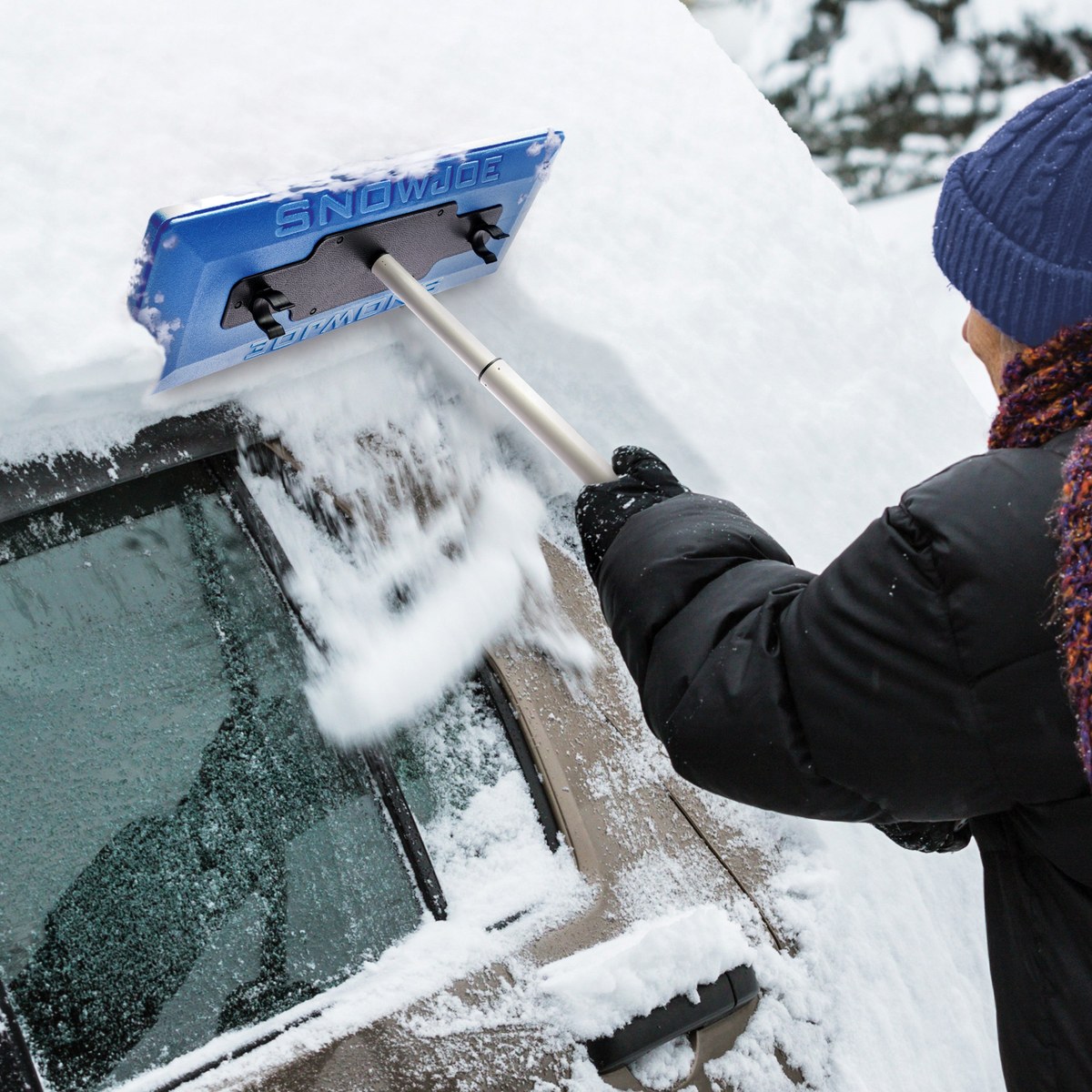
Prepare the car and the kit
A kit helps while you wait or deal with a minor problem. It does not replace tires, a working battery, safe road conditions, or a decision to postpone non-essential travel.
- Match supplies to local weather and every regular passenger.
- Keep the kit reachable when the cargo area is loaded.
- Check it before the season and before longer winter trips.
Last reviewed: August 16, 2026. The safety guidance below was checked against current Ready.gov and NHTSA winter-driving information.
Quick checklist
- Visibility and traction: snow shovel, broom, ice scraper, and abrasive material such as sand or cat litter.
- Be seen: flashlight and warning devices such as flares, reflective triangles, or emergency markers.
- Stay warm and supplied: blankets, water, food, and any necessary medicine.
- Stay connected: cell phone and car charger.
- Handle a common vehicle problem: jumper cables and a basic first-aid kit.
Winter items to keep in the car
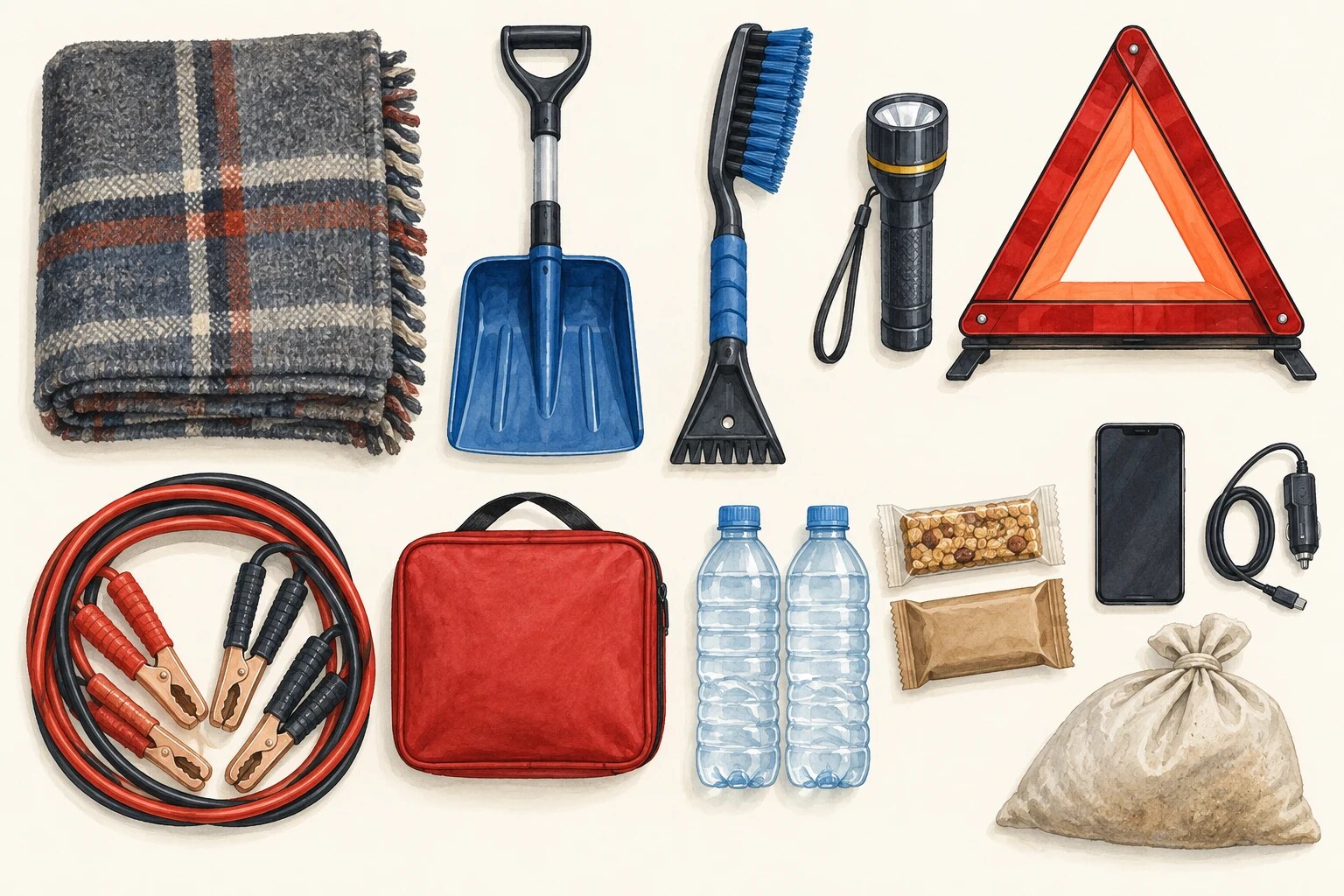
Ready.gov lists jumper cables, flares or a reflective triangle, an ice scraper, a car phone charger, a blanket, a map, and cat litter or sand for tire traction among its car-emergency extras. NHTSA also recommends a snow shovel, broom, warning devices, flashlight, water, food, needed medicine, and blankets. Keep only supplies you can store safely and replace items that have been used or have expired.
Before a winter trip
- Check the forecast and road conditions. NHTSA advises considering whether to postpone non-essential travel when roads are not in good shape.
- Check tires against your vehicle information. Use the pressure in the owner’s manual or driver-side door-frame label, not the maximum pressure molded into the tire sidewall.
- Check the spare and vehicle basics. NHTSA says to inspect the spare, while Ready.gov includes the battery, brakes, heater and defroster, lights, wipers, washer fluid, and other maintenance items in pre-emergency preparation.
- Make the kit accessible. Do not bury the scraper, charger, blankets, or warning devices under luggage.
- Tell someone your plan for a longer trip. NHTSA recommends sharing your route and anticipated arrival time when traveling farther from home.
Use the vehicle’s own guidance
Vehicle-specific settings and equipment matter. Follow the owner’s manual for tire pressure, tire chains, traction controls, charging, warning lights, and any recovery procedures. If your vehicle is stuck, damaged, or unsafe to drive, seek appropriate roadside or professional help rather than relying on a checklist to solve it.
Helpful related guides
For winter visibility, see our snow brush and ice scraper guide. For broader preparation, use the roadside emergency checklist, then compare portable jump starters and portable tire inflators. You can also browse current Car Gear Deals.
Sources and accuracy note
This checklist is based on the Ready.gov car-safety guidance and NHTSA winter weather driving tips, checked August 16, 2026. It is general preparedness information, not emergency response, medical, or vehicle-repair advice. Follow local restrictions and your vehicle manufacturer’s instructions.